Melon Kundang: A Playful Script Handwritten Font for Creative Fonts
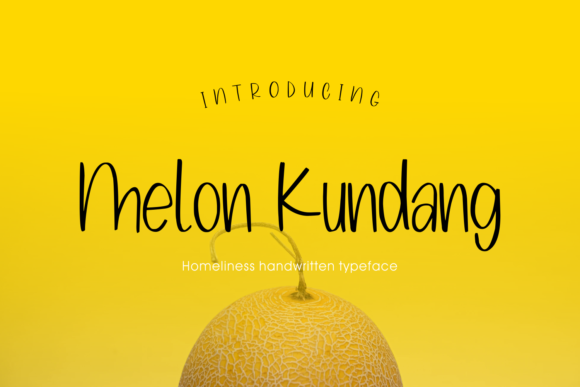
It began with a single line of text — the title of my next seasonal newsletter: “Summer Slow Down.” I’d just finished drafting a gentle, reflective piece about mindful mornings and backyard herb gardens. The tone was warm, unhurried, personal. But the font felt wrong. Too stiff. Too polished. Like wearing wool socks in July. That’s when I reached for Melon Kundang — a Script Handwritten font that doesn’t just sit on the page but seems to sway, pause, and smile as it reads.
Melon Kundang for Lifestyle Blog Headers and Reader-Friendly Branding
I tested Melon Kundang as the main header font across my lifestyle blog redesign — not for every paragraph, but for those quiet, intentional moments: the masthead, the “About” section subtitle, the closing signature at the end of each post. Its charming, playful characters truly do seem to dance along the baseline — light on their feet, full of breath, never rushed. It doesn’t shout; it leans in. That subtle rhythm supports the editorial voice I’m cultivating: thoughtful, grounded, creatively tender. As a Script Handwritten font, Melon Kundang works best at larger sizes (36pt and up), where its personality shines without sacrificing clarity — especially on mobile screens and retina displays.
Melon Kundang for Recipe Ebook Covers and Chapter Openers
Last month, I designed a small digital cookbook — 24 seasonal recipes, hand-illustrated, meant to be printed or read on a tablet. For the cover, I set the title “Peach & Thyme” in Melon Kundang, paired with a soft serif body typeface for the subtitle and description. The contrast worked beautifully: the script font carried warmth and invitation, while the serif kept things legible and trustworthy. Inside, I used Melon Kundang only for chapter openers and ingredient headers — never for full recipe steps. Why? Because Melon Kundang is a display font, not a reading font. Its charm lives in brevity, not blocks of text. As one of the more expressive Fonts in my library, it earned its place where attention matters most.
Melon Kundang for Wedding Guides and Elegant Printables
A friend asked me to help design a downloadable wedding planning guide — soft-toned, journal-style, full of handwritten notes and checklist boxes. We wanted something that felt personal but still refined. Melon Kundang became our hero font for section titles (“Venue Visits,” “Floral Mood Boards,” “First Dance Playlist”) and decorative accents like divider lines and quote callouts. Its playful energy balanced perfectly with clean sans serif captions and ample white space. As a Script Handwritten font, Melon Kundang adds tactile intimacy without veering into cutesy — essential for wedding content that serves both dreamers and doers. When exported to PDF or printed, its curves hold up beautifully, especially in high-resolution formats.
Melon Kundang for Coaching Workbooks and Printable Planners
In a recent coaching workbook project — focused on daily reflection and habit tracking — I used Melon Kundang for all prompt headings: “What Felt Light Today?” “Where Did You Pause?” “One Small Step Forward.” These aren’t functional labels; they’re gentle invitations. And Melon Kundang delivers exactly that tone — approachable, human-scaled, quietly confident. As a Script Handwritten font, it signals care in the design, which readers subconsciously associate with care in the content. Just be sure to check licensing before bundling Melon Kundang into paid digital products — commercial use is supported, but always verify included file formats (OTF/TTF), language coverage, and whether ligatures or stylistic alternates are available for richer typographic expression.
Melon Kundang for Digital Magazine Layouts and Editorial Features
For a recent feature on ceramic artists, I set the headline in Melon Kundang, then layered it over a muted photo background with generous letter spacing and soft drop shadow. The result felt handmade, intentional, and quietly luxurious — a far cry from generic script fonts that blur into visual noise. In editorial layouts, Melon Kundang excels as a focal point: pull quotes, bylines, section dividers, even logo lockups for micro-publications. It pairs effortlessly with classic serifs (like Adobe Garamond or EB Garamond) for body copy, or airy sans serifs (like Inter or Sofia Pro) for captions and navigation. As one of the more distinctive Fonts in the Script Handwritten category, it helps establish immediate visual identity — no color palette or illustration required.
Melon Kundang for Newsletter Graphics and Social Media Teasers
When designing a weekly newsletter graphic to tease an upcoming article on slow stitching, I chose Melon Kundang for the teaser phrase: “Stitch by stitch, thought by thought.” On Instagram and email banners, its playful flow slowed the scroll — just long enough for the reader to register meaning, mood, and intention. It performed well across platforms: crisp in PNG exports, graceful in SVG use, and stable in web-safe embedding via @font-face (with proper licensing). As a Script Handwritten font, Melon Kundang avoids the fatigue of overused brush scripts — its balance of elegance and ease makes it feel fresh, not formulaic.
How to Use Melon Kundang Thoughtfully in Your Next Project
- Best for: Titles, cover text, pull quotes, section headers, logos, and decorative accents — never long-form body copy
- Avoid for: Captions under 14pt, dense infographics, multi-language documents (unless multilingual support is confirmed)
- Pair with: A highly readable serif for print or a neutral sans serif for digital interfaces
- Check before use: Included weights, OpenType features (ligatures, swashes), commercial license scope, and file compatibility with your design tools
What stays with me isn’t just how Melon Kundang looks — it’s how it feels to work with it. Calm. Considered. Kind. In a world of fast-scrolling feeds and algorithm-driven content, choosing a Script Handwritten font like Melon Kundang is a small, deliberate act of editorial care — one that invites readers to linger, breathe, and return.